Work More, Gain more, But Spend Less Capital – The Khmer Rouge, 3/1976
Republished from Revolutionary Male & Female Youth’s, Angkar’s publication for the youth.
This is the new slogan which our revolutionary male and female youths in the military, at every center, mi
-nistry, worksite, agricultural site, factory, and cooperative must apply regularly and seriously in their daily
work and life. They must do so in order to attack, defend, and build the country toward prosperity at a
wonderful and great leap forward pace. Please remember that on 17 April 1975, the Kampuchean people
and military, under the correct and bright leadership of the glorious Communist Party of Kampuchea, finally
and totally liberated the Kampuchean motherland. At the same time, we successfully and completely achieved
the democratic national revolution. We have also already completed a major phase of the socialist revolution.
For example, the state totally grasped the economy, finance, and commerce in the liberated zones and
organized low- and high-level production cooperatives in order to eliminate the private ownership regime
throughout the entire Type I liberated zones, Type II liberated zones, as well as in another large part of the
country. At present, we continue to carry out the socialist revolution and build socialism in Kampuchea.
This is the great honor of our revolutionary male and female youths of this generation, who directly waged
the war to liberate the nation and the people and who now have the opportunity to directly build the country
— that is, to build socialism in Kampuchea. However, we must recognize that these are also heavy tasks
for our revolutionary male and female youths of this generation. We must continue to destroy the previous
ruling regime — the oppressive regime of the imperialists, feudalists, and capitalists — which had a strong
base and was deeply rooted in Kampuchean society for over two thousand years. We must fight to eliminate
its classes, political regime, economic base, ideology, worldview, stance, and sentiments until they are
completely eradicated from our entire national society, from the revolutionary ranks, the people’s ranks,
the military ranks, the revolutionary male and female youths’ ranks, and from our individual selves. At the
same time, we must build socialism in Kampuchea — a brand-new regime that has never existed before
in our Kampuchean society. Noting these great yet heavy tasks, our revolutionary male and female youths
must necessarily continue the long-term struggle. We must endure all kinds of hardships unconditionally,
sacrifice more highly and unconditionally, and fight tense and tough battles in order to achieve the socialist
revolution and the building of socialism in Kampuchea, and to attain even newer and greater victories.
We want to successfully build total socialism in Kampuchea at the great leap forward speed, based on the
stance of independence-mastery and mainly on self-reliance. In order to do this, while strengthening our
revolutionary stance as mentioned above, it is necessary for our revolutionary male and female youths to
pay close attention to promoting the revolutionary thrift movement in all offices, ministries, work camps,
agricultural camps, cooperatives, factories, and throughout the entire military ranks. Thrift is an important
factor in building the country and socialism in our Kampuchea. We must recognize that Kampuchea is a
small country with a small population and is also a poor country. In order to build the country and socialism
at the great leap forward speed, relying mainly on our own population and capital, we must strive to run
very fast to succeed. If we only walk or run at a normal speed, it will not be possible. Striving to run means,
on one hand, attacking vigorously to develop and carry out all kinds of work. On the other hand, striving to
run means paying high attention to revolutionary thrift. This means that if we only strive to work hard but
waste, damage, or carelessly discard the results everywhere, we will not be able to build socialism and the
country well — or at least as fast as we desire — no matter how strong we are or how hard we work day and
night. Therefore, thrift is one of the decisive factors in building socialism in our Kampuchea. What should we
manage in a thrifty way? To speak conclusively, we have to be thrifty with everything. This includes the consu
-mption of rice, salt, fish paste (prâhok), preserved fish (pha-âk), meat and fish, vegetables, clothes, various
tools, water and electricity, fuel, and even a string of thread, a nail, a piece of plywood, or even a piece of
firewood. At the same time, we must constantly save time and labor forces. This means we must know how
to use our time effectively so that it always benefits the work of defending and building the country.
Not even one day, one hour, one minute, or one second should be allowed to pass uselessly or be used to
think about difficulties or personal issues. Do not be distracted by anything that is not progressive or unre-
lated to the revolutionary tasks of defending and building the country. To save labor forces means knowing
how to manage the available forces for the appropriate work in a highly effective way — that is, using fewer
forces, means, and materials to achieve more work and greater results. In conclusion, in fulfilling all kinds
of revolutionary tasks — whether small or big, heavy or light — as well as in daily living and dressing, our
revolutionary male and female youths must never forget the Party’s slogan which states: “Work more, gain
more, but spend less capital.” We must keep this slogan in mind seriously, constantly, and everywhere. If
we can promote the revolutionary thrift movement well and vigorously everywhere in accordance with this
Party slogan, we will definitely succeed in building our country and building socialism in Kampuchea at a
great leap forward speed. Even though our country is small and poor compared to the imperialist great po
-wers, we already possess the basic capital. Our main capital is the revolutionary spirit, which is the decisive
factor and the mighty force that moves ahead of all kinds of materials and technology. If we examine our
revolutionary movement since the liberation of the whole country on 17 April 1975, we can see many merits.
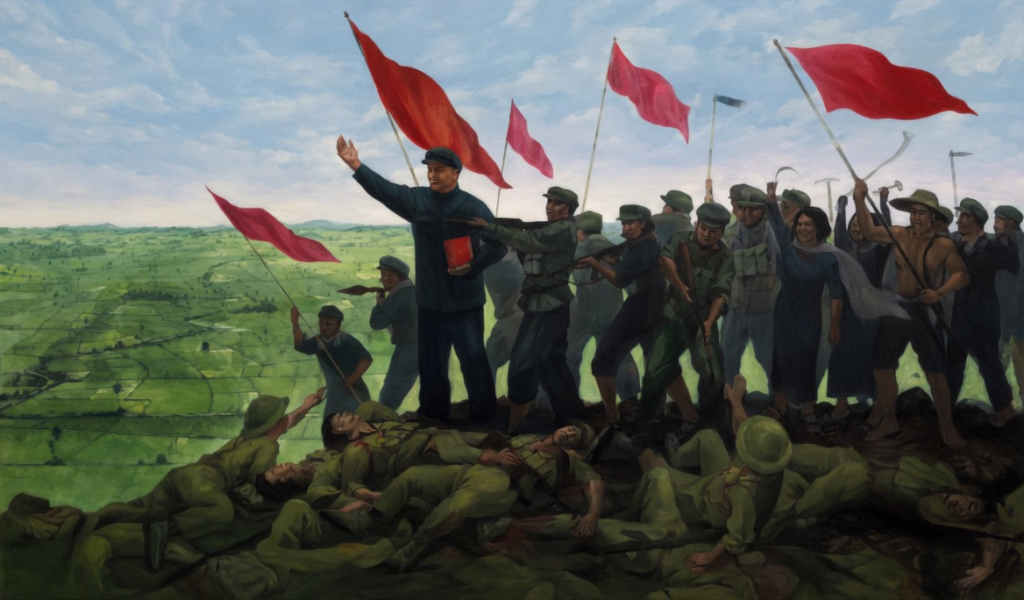
Our revolutionary workers, peasants, male and female youths, and cadres have continued to raise and wave
the attacking flag to defend and build the country vigorously and constantly, day and night. They have continued
to sacrifice more and endure all kinds of hardships in order to carry out revolutionary tasks and seize newer
and greater victories. However, alongside these merits, we have noticed that there are still some shortcomings
in general everywhere, particularly the lack of applying thrifty practices.
After the entire country was liberated, there were all types of materials — revolutionary booties — in Phnom
Penh and other provinces. These things had previously been controlled by the enemy before 17 April. We
acquired factories, machinery, cars, motorcycles, bicycles, materials, medicines, and many other kinds of
goods. As for military equipment, we obtained airplanes, tanks, ships, engine-boats, artillery, machine guns,
rifles, handguns, and all kinds of ammunition. If these revolutionary booties had been collected, stored well,
and managed and used properly and effectively for defending and building the country, we could easily have
used them for ten years. But from the time of liberation until now, we still face many shortages because things
in general have been wasted everywhere. This is because we thought there were plenty of things available.
We did not think about the heavy burden of the long-term strategy of defending and building the country.On
one hand, we used things and consumed food and drink wastefully. On the other hand, we wasted them by
failing to collect and preserve them properly for future collective use. That is why more than half of these
things have been lost, broken, or damaged everywhere. This is regrettable. Another shortcoming is that our
comrades still do not know how to love and cherish collective property. The positive point at present is that
within our revolutionary ranks, military ranks, and people’s ranks, we all work and live collectively. The poss
-ession of all kinds of materials and means of production has become collective property — belonging either
to the state or to the cooperatives. Each of us no longer has any private possessions. However, the shortcoming
is that when all materials, means of production, and food have become collective, and are seen as plentiful,
no one feels the need to think or worry about their living and working conditions anymore. No one needs to
borrow from others for living as they did under the private regime. Therefore, the issues of loving, caring for,
saving, using, consuming, and working with collective property have become challenging.
Because we depend on collective rations and can obtain whatever we need from the collective warehouse, our
comrades do not care when things are broken or damaged. Since we do not spend time finding or making these
things ourselves, our comrades do not love or take care of collective property the way they did with their own
things under the private regime. That is why our comrades have wasted half of what they eat and damaged or
broken half of what they use everywhere. Another shortcoming concerns the management of time, labor forces,
means, and other capital materials. Our comrades still do not know how to manage and use them more effectively.
In some places, they work like the officials and bureaucrats of the previous regime. They only think about the
working schedule — they do not start work if it is not official working hours, or during working hours they perform
tasks superficially and recklessly. They do not yet attack ardently, vigorously, and constantly. They are still
concerned about becoming tired or losing their break time. In other places, they still use capital means and
materials excessively and wastefully, in the manner of feudalist and capitalist bureaucrats. As a result, they
spend a lot of capital but achieve fewer results. In contrast, in some places they are able to set up and operate
their work smoothly with a high thrift stance by using only the necessary means and materials. In some places,
they use excessive manpower but achieve fewer results because they do not yet know how to manage and
distribute labor forces according to the scope of the work. In other places, they work vigorously day and night
but still achieve fewer results because they do not yet know how to develop proper work plans and projects,
or thoroughly and correctly assess the scope of the work. In summary, there are still many places where, in
general, we continue to waste materials, labor forces, and time during our work and daily living. That is why,
sometimes, at some places we work less, achieve less, but spend a lot of capital.
At other places we work more and spend more capital but still achieve fewer results. If we continue working in
these two ways, we will not be able to achieve the socialist revolution and build socialism in Kampuchea as qui
-ckly as we desire. Therefore, our revolutionary male and female youths at every ministry, office, work camp,
factory, and cooperative must necessarily and absolutely eliminate these two incorrect working methods. Along
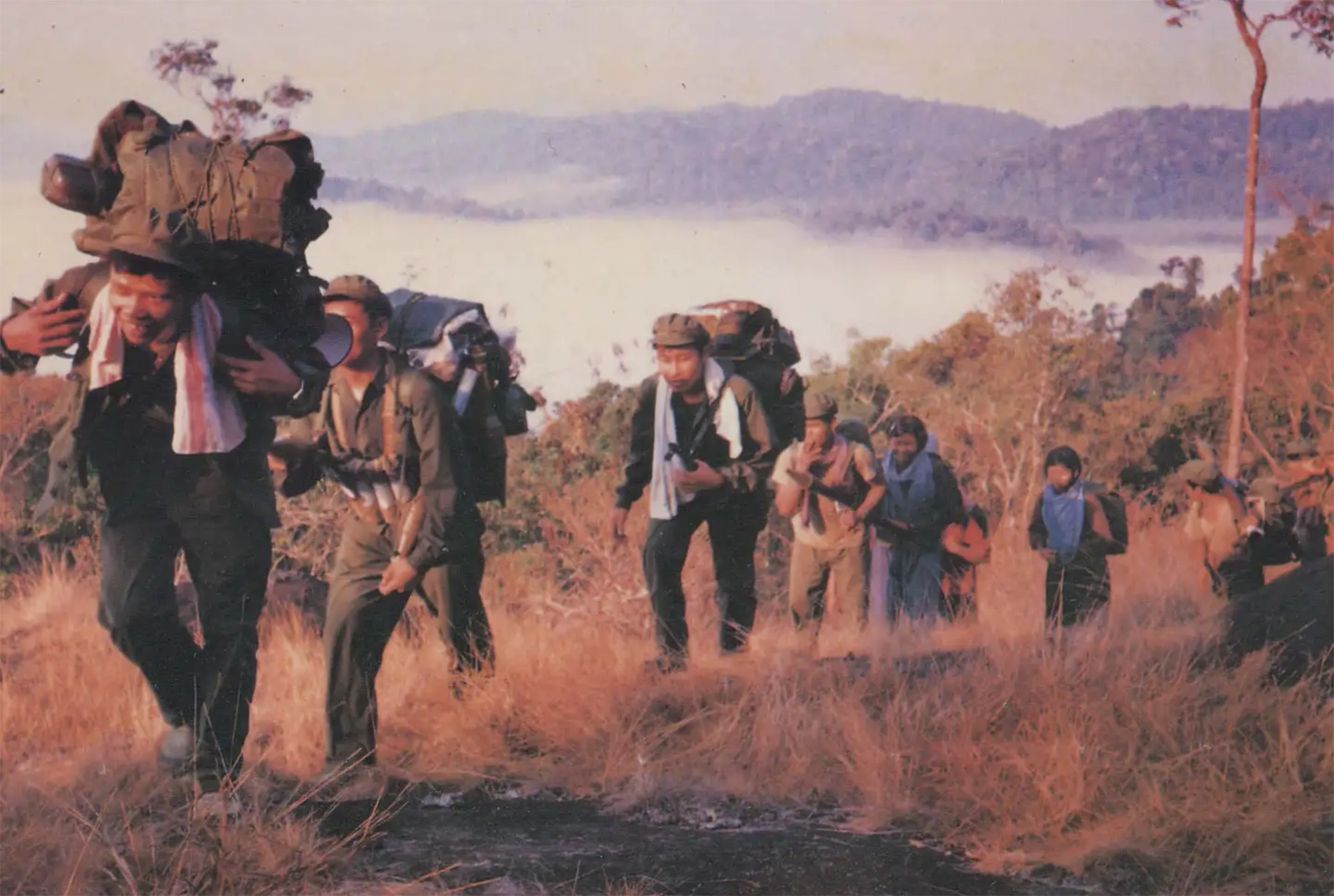
with the tasks of guarding the village and commune, protecting the revolutionary authority, and providing security
for the people with a high spirit of revolutionary vigilance, the male and female combatants of our revolutionary
army also go directly to do labor work vigorously together with the cooperative people. They help them build
dikes, dams, and canals in order to solve the water problem for food production. (Beung Preah Punlei village,
Bakan district, Pursat province) And we must highly and constantly promote the spirit of revolutionary thrift and
vigorously encourage the revolutionary thrift movement at every ministry, office, work camp, factory, and co-
operative. We must follow the slogan “Work more, gain more, but spend less capital” correctly and thoroughly
with high absorption and revolutionary consciousness. Our revolutionary male and female youths must learn,
absorb, and widely disseminate this Party slogan within the great attacking movement of the masses everywhere,
turning it into a revolutionary stance and a clear attacking force that pushes forward the tasks of defending and
building the country at a wonderful and great leap forward pace. If our revolutionary male and female youths
can do this, we will definitely succeed in carrying out the socialist revolution in Kampuchea and in building
socialism in Kampuchea strongly at the wonderful and great leap forward pace.