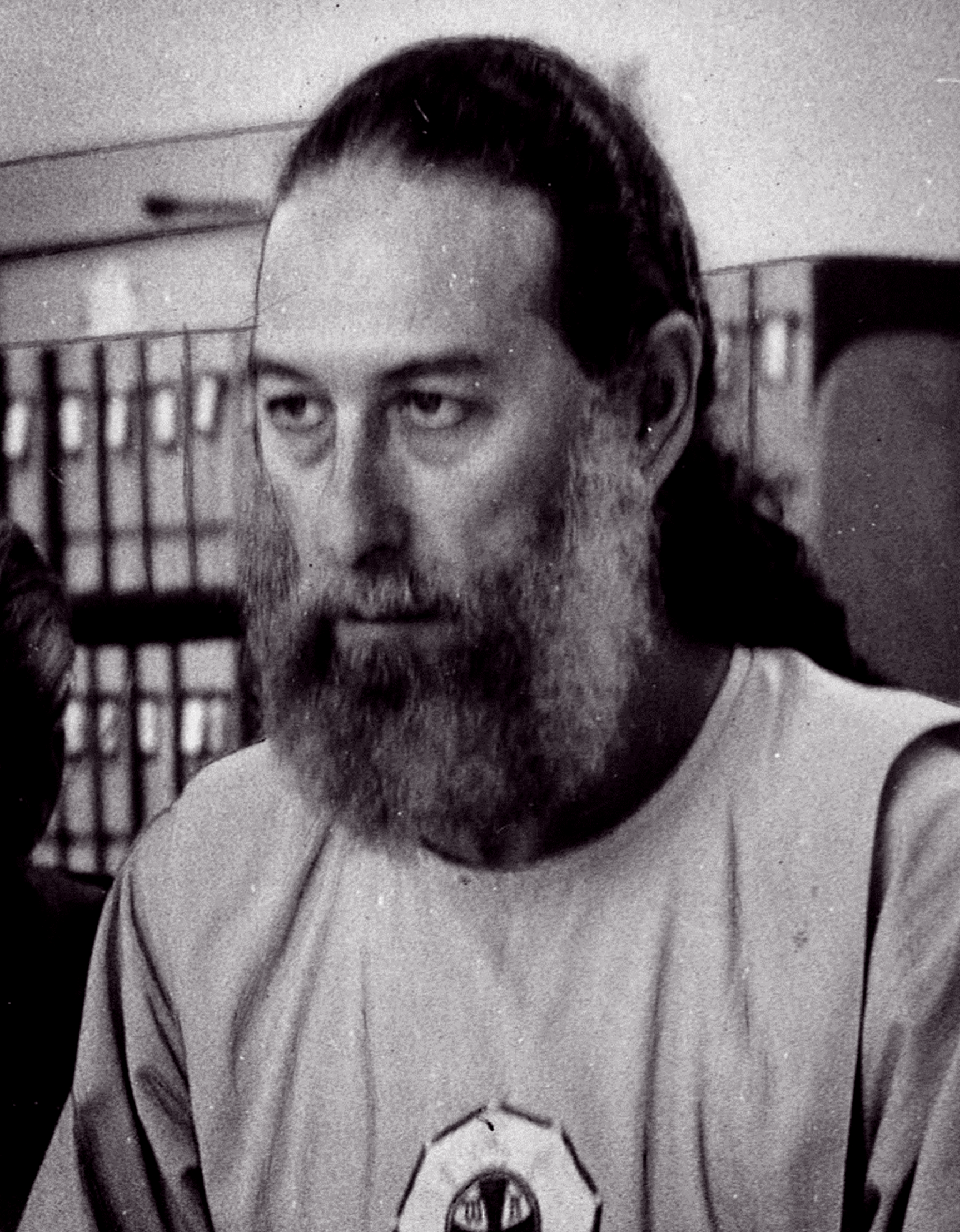
Types of Thought – Krishna Venta (Lecture, 1944)
There are as many different types of active thought as there are means of motivation. An individual seldom
compares thought to the modern types of mechanical automatons. Among the more popular types of motivation
are walking, running, sailing, flying, and rolling. Each of these, in its own form, is parabolic to thought. Let us
first take the walking thought. It is slow, active thought, assimilated by the mind and having in itself the power
of adjustment to all environments. It is easily apprehended by change and reacts for the moment. A walking
thought is emotional and exists only for a short time. In the course of a day, this form of thought will change
its expression a million times. The walking thought remains with you constantly during waking hours and can
be called your constant enemy because of its imaginative, self-created powers. Because this thought is of
short duration, it will confuse the average thinker, and if he is not careful, it will develop into an inferiority
complex and thus bring instability into his life. The running thought is a close second and vibrates on a slightly
higher cycle. This running thought can also be called a rambling thought because of its power to enact a scene
of distant events. Unlike the walking thought, which expresses only one thing at a time, this running thought
has the power to create an almost perfect pattern of events. A running thought is also emotional and deals
with the sense of elation and excitement. It develops within itself a momentary panorama of elation which
rises to a high crescendo, then immediately loses its power of attraction. A running thought reacts specifically
in the mind of each human being, though it is most predominant in the daydreamer. It seldom lasts long and is
soon forgotten. Depending upon the length of this running thought lies the duration of a man’s elation. He may
become so excited over what he is thinking that he must give vent to his emotions by telling someone else.
In this way, he satisfies his urge and the thought is soon forgotten. If there is no one around to whom he can
relate his thoughts, he will perhaps write or perform some experiment. In this way, the excitement is soon over
and laid aside. Sometimes these running thoughts have a lasting effect on individuals, and though the excitement
soon departs, the memory of it remains throughout life. Third in this group is the sailing thought, which finds
itself always in deep water. It has a starting point and always a destination, but never a substantial foundation.
Those who act upon a sailing thought are seldom understood by others because of their own lack of understanding
of that which they are speaking. A sailing thought is slow in action and is many times apprehended by natural
environments. It rides the crest of the waves and seldom delves into the depths of practicality. It faces the
storm of protest but seldom wins out. Its canvas is spread to catch all that is said but is unable to use it to
advantage. A sailing thought is applied more directly to the man who is a jack-of-all-trades but a master of
none and is dependent upon others for continued success. Fourth in this series is the flying thought—more
predominant among thinkers of philosophy, religion, and art. The flying thought is also the master of fanaticism.
It soars on high at a rapid speed, taking in a great quantity of ideas at a single glance. Because of its wide
scope, it becomes individually wise and desires to propound its findings upon those who have not the capacity
to comprehend them; for if not divided into smaller quantities wherein they can be utilized, this thought in itself
can become fanatical. An example wherein a flying thought was used in a practical sense is found in the case
of Thomas Edison, who, upon looking at an object for the first time, understood its complete possibilities.
Thomas Edison then went to work on this flying thought by tearing down its component parts and utilizing
every phase of its existence through scientific and concrete examples.
Others may receive these flying thoughts and be unable to place them in completed form whereby man can
understand. Therefore, this thought is of no value, and upon the individual who received it rests the mark of
fanaticism. Finally, we come to the rolling thought. It, in turn, is more practical than any of the rest. Unlike the
old proverb, “A rolling stone gathers no moss,” this thought gathers knowledge as it rolls along. And like the
last part of this same proverb, it ends up with a fine polish. The rolling thought may be rugged at first, but
as it continues on, the rough places are smoothed out, and when it is completed, a beautiful ring of practical
thoughts comes into existence. This thought may germinate within the mind as a little seed, and as it rolls
along through life, it gains momentum, power, and strength. This form of thought is never idle and seldom
fails to reach its ultimate goal. The foundation of life and success is based upon rolling thought. It is a symbol
of natural progression from beginning to end. The universe is a perfect example of this finished product. A
rolling thought in its infancy is easily sidetracked by the walking thought; but as it ages, strength is accumulated
and it soon becomes capable of individual expression. This thought then remains in its given channel and easily
absorbs everything that may be of benefit to its development. For example, a successful businessman attains all
knowledge available pertaining to the field of his profession. At first, he may accept impractical ideas, but through
experience he soon discards them. Like a rolling stone, it too may pick up particles along the way, and for their lack
of necessity to its development, they will soon be cast off. A rolling thought is of two parts: spiritual and material.
After both are assimilated into practical usage, they become the property of individual progress toward success.
And in conclusion, I would say that rolling thought is necessary for the continued existence of stability.