The Preconditions For the 1976 Rainy Season – The Khmer Rouge, 1976
Republished from Angkar’s official publication The Revolutionary Flag
During the year of 1975 that has just passed, even though our people and our nation had only just emerged
from a war of great devastation, and lacked cattle and buffaloes, seed, and the various tools needed to increase
production, our people still strived to go on the offensive. They worked to resolve all these shortages and fought
day and night to increase production until they achieved many good results, surpassing all previous years.
These results are pleasing to us when we compare them to the scarce resources and means we had at the
time. However, alongside these positive achievements, we must draw lessons from our shortcomings during
1975 in order to strengthen and further advance the movement to increase production in 1976, making it better
and more excellent, so that we can absolutely and completely achieve the target of three tons per hectare on
average. During 1975, although we obtained many results that surpassed previous years, when we examine
the preparations for the offensive to increase production in the rainy season, we find that there were almost
complete shortages — both materially and in terms of objective and subjective factors. Objective deficiencies:
In mid-April, we had only just ended the war. Moreover, nearly 3,000,000 people from various cities had been
relocated to live and increase production in the countryside. By July and August, the relocation movement of
these new evacuees was still not yet fully completed. At the same time, our revolutionary state authorities in
the base areas, together with all the people in the cooperatives, were busy day and night helping to resolve
both the material and spiritual living conditions for these nearly 3,000,000 people. Therefore, as we approached
the transplanting season, a large portion of our people had not yet reached stable locations or begun thinking
about preparing to launch the offensive to increase production. Generally speaking, during 1975 we did not
have the opportunity to think ahead and prepare the offensive to increase production in an orderly manner.
As a result, we were short of everything: cattle, buffaloes, plows, harrows, seed, food supplies, and even hoes,
knives, machetes, and hatchets. Subjective deficiencies: We also had shortcomings, particularly when we went
down into the fields to work the rice paddies. Deficiency number one: The issue of preparing and using manpower
most appropriately and efficiently. In some locations, massive layers of labor forces were mobilized, but there
was confusion and no one knew what anyone was supposed to do. Some forces were left idle and abandoned.
In other locations, there was a shortage of manpower — either because there were too few people for the large
areas of paddy land, or because too many people were sick and there were no replacement forces. Deficiency
number two: The issue of water management and distribution. Some locations suffered from drought, while
others were soaked and damaged by floodwaters. Natural disasters that we are not yet able to master are one
issue. However, in locations that have water, dams, and canals and are capable of mastering nature, such
damage still occurred. For example, upper paddies still held a lot of water, but because no arrangements were
made to let it flow to the lower paddies, the lower paddies dried out, cracked, and the seedlings wilted and were
damaged. In other places, the lower paddies were flooded and the seedlings were all destroyed, while the
nearby upper paddies shriveled and wilted. This happened because we had not yet mastered the management
and distribution of water — letting water flow in and out and distributing it properly to every paddy. Deficiency
number three: When the seedlings and plants were green and growing well, due to recklessness and non-
meticulous management, we allowed cattle and buffaloes to eat entire paddies of seedlings, or we chased the
animals helter-skelter through the fields, trampling and damaging whole areas of seedlings. Deficiency number
four: In some locations, because cadres were not assigned in detail to care for the seedlings, rats, crabs, grass
-hoppers, caterpillars, and so on were allowed to eat, cut, and destroy hundreds of hectares of rice.
Deficiency number five: In other locations, fertilizer was used without experience or conscientiousness —
people did not know when to spread it or what type of fertilizer to use. Our brothers and sisters simply kept
spreading it until it became excessive, causing entire paddies of seedlings to rot and die. And so on. In sum-
mary, although our brothers and sisters went on the offensive during 1975, working day and night and achieving
more results than ever before, advance preparation was lacking. The other offensive movements, even though
they were strenuous and reached a mighty boil, were not yet orderly and smooth; they were still somewhat
ragged. Based on the experience of what went right and what went wrong during 1975, during this year’s
rice-growing season we must make orderly advance preparations to launch the 1976 rainy season offensive,
with the absolute aim of achieving three tons per hectare on average. 1. Advance preparations before rice
farming time It is imperative to double or triple the amount of seed to protect against natural disasters that
occur every year, such as high waters that cause flooding and damage to seedlings, or drought that leads to
wilting and death of seedlings. In both cases, we will then have additional seed to sow immediately to repair
and fill in the paddies without losing time. As for implements — plows, harrows, hoes, knives, and so on —
it is imperative to repair them in advance, rebuild plowshares, plow carriage parts and handles, or build new
plows and harrows to fully meet requirements. We must avoid the disorder of going down to plow and harrow
only to then have to run around searching for tools or making carriage parts and handles at the last moment.
It is imperative to feed the cattle and buffaloes — our important labor source for working the rice fields — and
allow them to fatten and grow strong during the dry season by providing fodder and water, ensuring they sleep
on full stomachs, and not using them mercilessly until they break down.
If the cattle and buffaloes are already tired and weakened during the dry season, how can they have the strength
to launch a full offensive to plow and harrow during the rainy season? It is imperative to prepare food, salt, ferment
-ed fish, spoiled beef, and fish paste, and pack them in jars ready to be taken to the rice fields. This way, we will
not need to run around searching for supplies when it is time to work. Moreover, when we have sufficient food
supplies already prepared and in reserve, during the busy rainy season when we are occupied day and night
with transplanting, we will be able to feed the forces of our cooperative members so they do not become exhausted,
fall ill, and negatively impact the labor force and the offensive movement. 2. Preparations at rice farming time
It is imperative to be vigilant about water management: both pumping water in and out of the paddies to meet
requirements, and regularly, meticulously, and routinely assigning guards to inspect dams, paddy dikes, and
feeder canals to prevent them from collapsing, leaking, or becoming clogged — events that lead to spillage and
waste of water or to flooding and damage of seedlings. Furthermore, we must properly manage water distribution
so that it reaches both all the lower paddies and all the upper paddies. It is imperative to care for the seedlings
well and meticulously by weeding and spreading fertilizer at the appropriate time according to the rice’s needs.
We must manage pumping water in and out of the seedbeds as required, and regularly inspect the seedlings,
re-transplanting any spots where old seedlings have been damaged or died. When the seedlings are growing
well, it is imperative to be vigilant against insects, crabs, caterpillars, worms, and so on that eat and destroy
them. Therefore, we must organize the making of insecticides and arrange regular patrols to care for the seedlings
and spray them. When the seedlings are green and growing well, it is imperative to be vigilant against cattle
and buffaloes eating or trampling them. Therefore, we must organize teams to be responsible for tending the
cattle and buffaloes properly. In rice paddies near paths where cattle and buffaloes walk, we must build fences
to protect the seedlings from being trampled or eaten.
Mastering the labor force It is imperative to tightly grasp the labor force in each cooperative — to know
how many strong (“sharp”) forces and how many intermediate forces there are — in order to manage and
use them most effectively. Furthermore, we must maintain reserve forces as replacements when cooperative
members fall ill, so that work is not impeded and the offensive movement is not blocked. It is imperative to
adopt a broad view of cooperation with nearby cooperatives. We must not have the narrow view of only
thinking within our own framework. Regarding the labor force, we must assess the reality of whether our
cooperative has fully mobilized all its labor, and if we can pull out idle forces to help nearby cooperatives
that lack manpower. As for water, we must make contingencies for the lower and upper paddies of nearby
or adjacent cooperatives. We must avoid thinking only about whether our own paddies have enough water
while paying no attention when nearby paddies are flooded or dried up and cracked. Instead, we must think
of ways to help by opening dams and feeder canals to distribute water to one another, putting water into or
out of the rice paddies according to their needs. As for seedlings, we must know how to reserve them for
contingencies and cooperate by distributing seedlings from one cooperative to another. When one cooperative
has excess seedlings that cannot be transplanted in time, we must distribute them to other cooperatives that
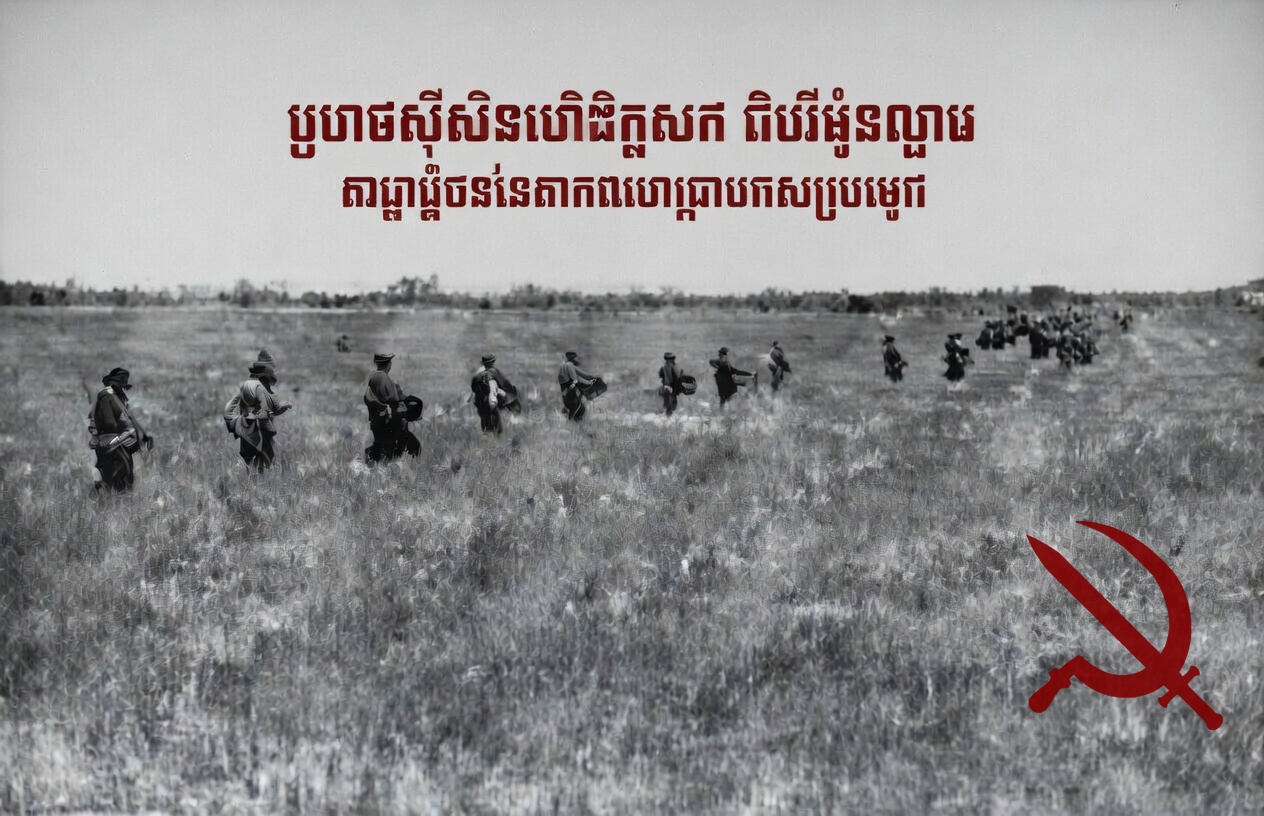
lack seedlings, rather than letting them rot or grow old and damaged in the seedbeds. (Combatants of a
Border Defense Unit in the Southwest Zone use their free time from guarding and patrolling the forests to
busily transplant rice in order to support themselves and to help improve the livelihood of the general populace
as well.) 4. Leadership issues In their positions as leaders, our cadres must prepare all preconditions in order
to master every contingency. It is imperative to master nature both in times of drought and major flooding.