Speech at Commemorative Meeting for Mao Zedong – Pol-Pot, 9/13/1976
Big Memorial Meeting Held in Phnom Penh to Mourn the Passing of Chairman Mao Zedong A large mem
-orial meeting attended by around 1,000 civilians and army personnel took place in Phnom Penh on Sept
-ember 18 to deeply mourn the passing of Chairman Mao Zedong. Phnom Penh workers, agricultural coop
-erative members, men and women fighters of the Kampuchean Revolutionary Army, and cadres from state
organs came in neat formations to the meeting place. With profound grief, they expressed the Kampuchean
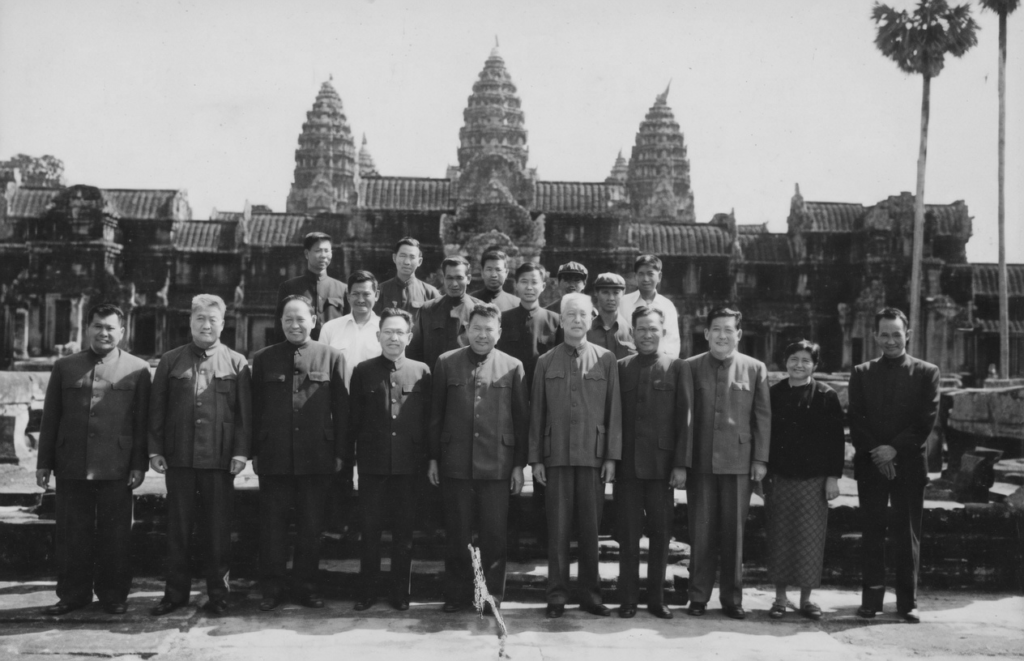
people’s boundless love and admiration for Chairman Mao Zedong. Attending the meeting were President
of the Presidium of the State of Democratic Kampuchea Khieu Samphan, Chairman of the Permanent
Committee of the People’s Congress of Kampuchea Nuon Chea, Prime Minister of the Government of
Democratic Kampuchea Pol Pot, Deputy Prime Ministers Vorn Vet and Son Sen, Minister of Information
and Propaganda Hu Nim, Minister of Health Thiounn Thioeun, Minister of Social Affairs Ieng Thirith, Mini
-ster of Public Works Toch Phoeun, and Minister of Culture and Education Yun Yat, as well as leading
members of other government departments and the Kampuchean Revolutionary Army. Chinese Amb
-assador to Democratic Kampuchea Sun Hao and other Chinese personnel were also present. At 9:30
a.m., Minister of Information and Propaganda Hu Nim declared the meeting open. All participants stood
in silent tribute as funeral music played. Prime Minister Pol Pot delivered the memorial speech. He said:
“With the most profound sorrow and cherished memory, we are gathering here for a mass rally to express
our revolutionary feelings of immense esteem and respect for the lofty soul of His Excellency Chairman
Mao Zedong— the respected and beloved great leader of the Chinese people, our brotherly comrades
-in-arms, an outstanding teacher of the international proletariat and the world’s oppressed nations and
oppressed peoples, and a close and enthusiastic comrade-in-arms of the Kampuchean people.”
“The life of His Excellency Chairman Mao Zedong,” the Prime Minister added, “was a life of profound sig
-nificance in fierce revolutionary struggle — a life devoted to the liberation cause of the Chinese people,
to the revolutionary cause of the oppressed nations and oppressed peoples, to the cause of the international
proletariat, and to the struggle for socialism and communism in China and the world.” Prime Minister Pol
Pot gave a detailed account of the glorious revolutionary life of Chairman Mao Zedong and the great
achievements in revolution and socialist construction scored by the Chinese people under his wise
leadership. He said: “These great victories were the outcome of the implementation by the Chinese
Communist Party of the proletarian revolutionary line under the firm leadership of His Excellency Chair
-man Mao Zedong.” He continued: “The Chinese revolution, under the wise and correct leadership of
His Excellency Chairman Mao Zedong, has produced rich experience which has set the best and most
valuable example for the contemporary world revolutionary movement after Marx, Engels, Lenin and
Stalin. His Excellency Chairman Mao Zedong summed up this experience and turned it into classical
literature of Marxism-Leninism, namely Mao Zedong Thought, which is most valuable for the Chinese
and world revolution of our time and in the future.” “His Excellency Chairman Mao Zedong’s works —
Analysis of the Classes in Chinese Society, Problems of Strategy in China’s Revolutionary War, On
Protracted War, On Contradiction, On Practice, On New Democracy, On the People’s Democratic
Dictatorship, and On the Correct Handling of Contradictions Among the People — as well as his
theories on the building of rural revolutionary base areas, on the role of the countryside and the city
in revolutionary struggle, on people’s war, on China’s revolutionary art and literature, on the Great
Cultural Revolution, and on class struggle and the dictatorship of the proletariat in the period of
socialist revolution and socialist construction, have successfully gone through repeated tests in
the revolutionary movements in China and the world, in the people’s national liberation struggles,
and in socialist revolution and socialist construction.
These works are illustrious Marxist-Leninist literature and are immortal.” “His Excellency Chairman
Mao Zedong performed magnificent exploits for the Chinese nation and the whole world. He was
an eminent teacher in the international revolutionary movement after Marx, Engels, Lenin and Stalin.”
Prime Minister Pol Pot paid tribute to Chairman Mao Zedong for his tremendous support and en
-couragement to the Kampuchean people in their struggle for national liberation and in the new stage
of the revolution. He said: “The passing of His Excellency Chairman Mao Zedong is an extremely
grievous loss to the revolutionary organization, the people, and the Government of Democratic
Kampuchea.” “The Kampuchean people will never forget the most extraordinary sentiments and
lofty spirit of internationalism that His Excellency Chairman Mao Zedong showed toward the Kam
-puchean revolution and people. The Kampuchean people boundlessly esteem and wholeheartedly
admire his noble and exemplary revolutionary life and noble revolutionary qualities. With the most
profound revolutionary and brotherly sentiments and with deepest grief, the Kampuchean people
pay homage to the lofty soul of His Excellency Chairman Mao Zedong.” “As the Kampuchean rev
-olutionary organization and the Communist Party of China, as well as the people of the two countries,
base themselves firmly on Marxism-Leninism and on the principles of genuine equality, mutual res-
pect, respect for each other’s sovereignty and independence, and non-interference in each other’s
internal affairs, the Kampuchean people under the leadership of the Kampuchean revolutionary
organization and the Chinese people under the leadership of the Communist Party of China and
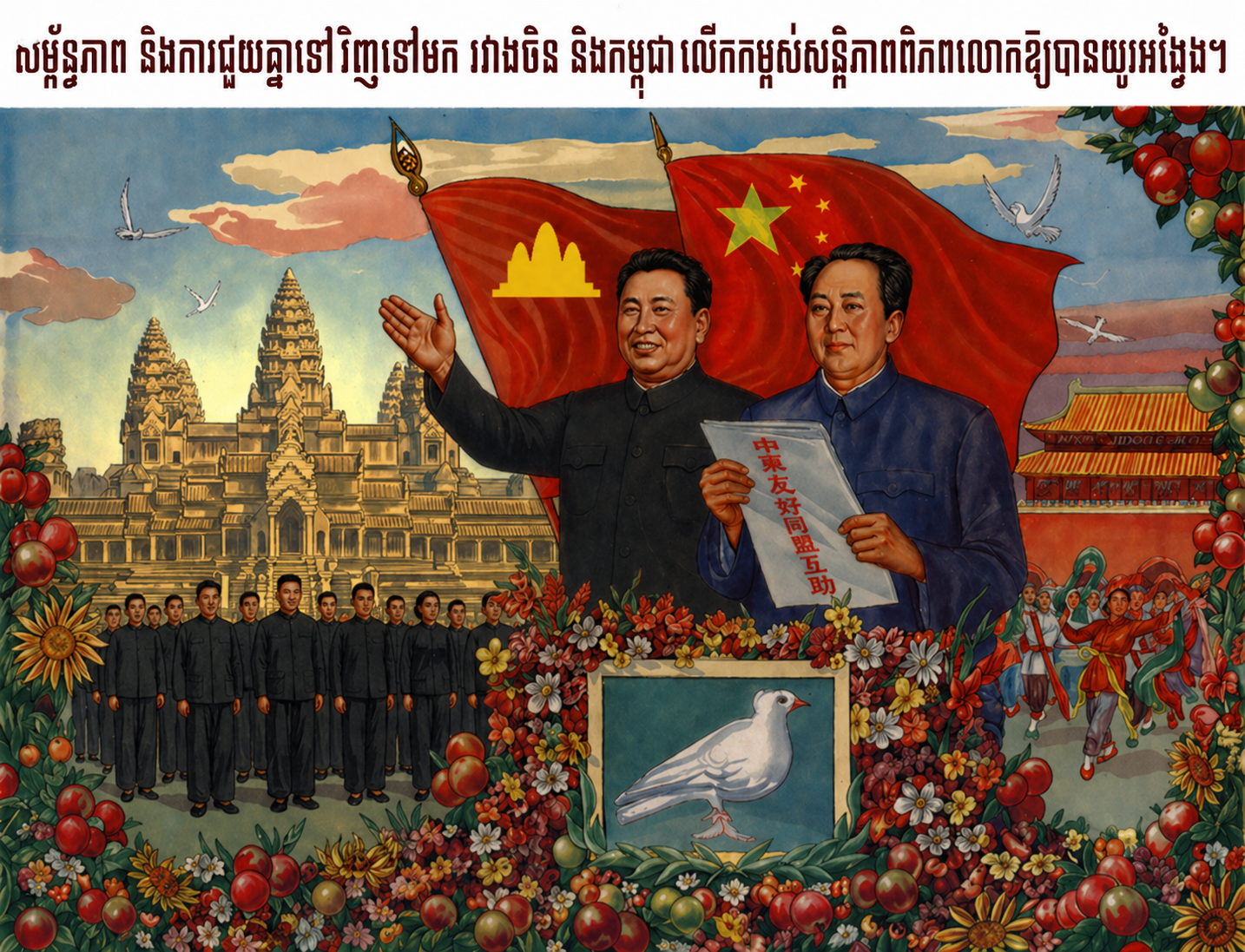
His Excellency Chairman Mao Zedong have consolidated and developed the great, splendid and
solid militant unity and brotherly revolutionary friendship between our two parties and two peoples.”
“The Kampuchean revolutionary organization, the Kampuchean people, the Government of Democratic
Kampuchea, and the Kampuchean Revolutionary Army will continue to stand firm on the basis of Marx
-ism-Leninism and adhere to the principled stand of equality, mutual respect, respect for sovereignty
and independence, and non-interference in each other’s internal affairs. We will consolidate and further
develop the great militant unity and great revolutionary brotherhood between the Kampuchean revol-
utionary organization and the Communist Party of China, and between the people of our two countries,
and make them even more splendid.” Prime Minister Pol Pot concluded: “Although His Excellency
Chairman Mao Zedong has left the Chinese people and the oppressed peoples of the world, his name
and his revolutionary thought will always be a beacon for the Chinese revolution and world revolution,
just as Marx, Engels, Lenin and Stalin are beacons guiding the road of revolution. In this moment of
boundless sorrow and memory, the Kampuchean revolutionary organization, the Kampuchean people,
the People’s Congress of Kampuchea, the Presidium of the State of Democratic Kampuchea, the Gov
-ernment of Democratic Kampuchea, and the Kampuchean Revolutionary Army extend with deepest
revolutionary affection the most profound condolences to the Communist Party of China, the Government
of the People’s Republic of China, the Chinese People’s Liberation Army, and our fraternal comrades-
in-arms — the Chinese people. Eternal glory to His Excellency Chairman Mao Zedong, the respected
and beloved great leader of the Chinese people, an outstanding teacher of the world revolutionary
movement, and a close and enthusiastic comrade-in-arms of the Kampuchean people!”